
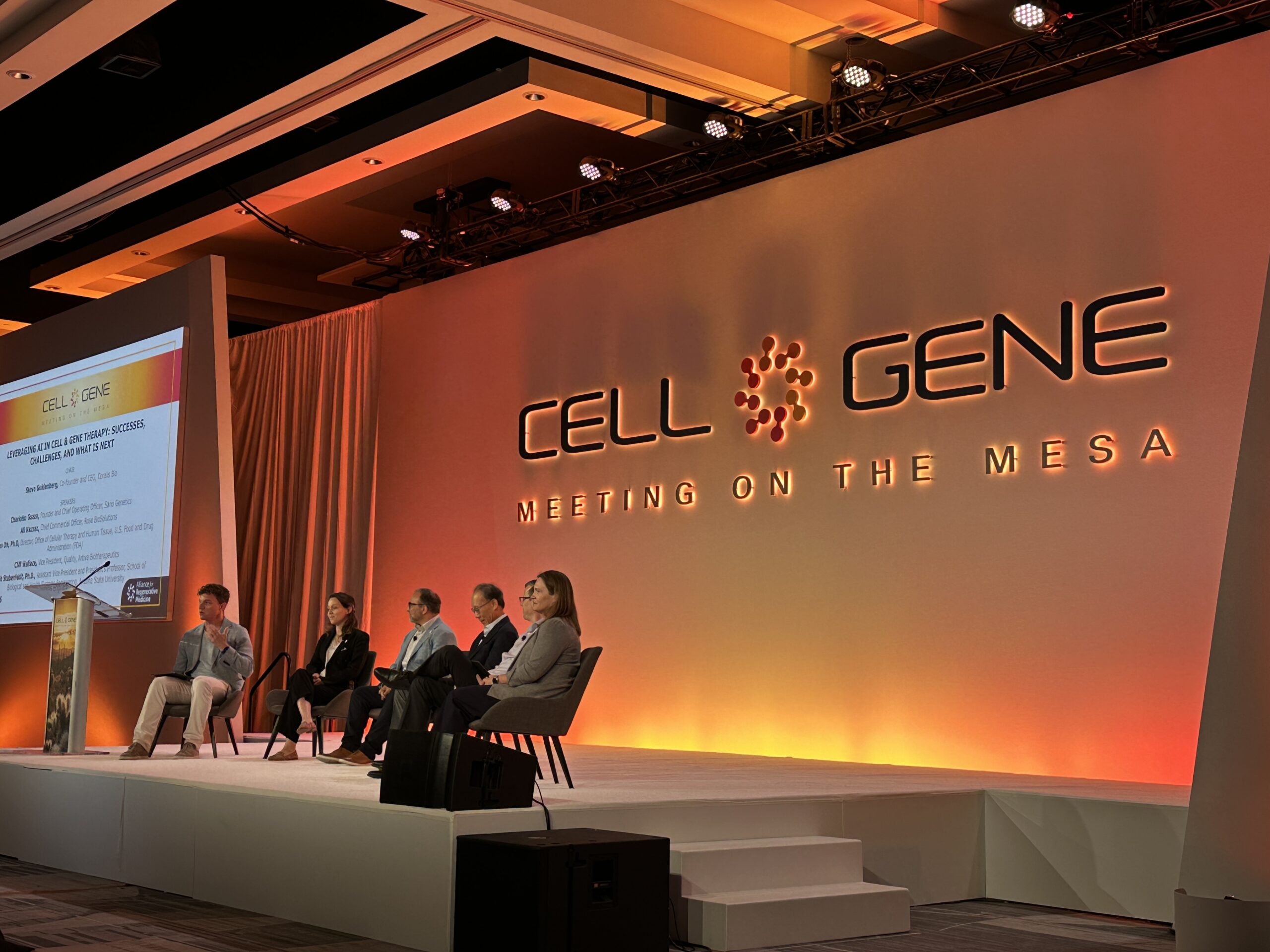
I sat in on the AI session at ARM’s Cell & Gene Meeting on the Mesa this week, and Steven Oh, Director, Office of Cellular Therapy and Human Tissue, US FDA, said something that stuck with me: “AI has a lot of promise, but there are a lot of challenges ahead.”
He also spoke to the complexity of cell and gene therapy and the problem of limited data, which he called inherent to the field right now. That’s especially true in rare and ultra-rare diseases, where patient populations, and the data that come with them, are small. These are the same programs that could benefit most from shared platforms and prior CMC knowledge, so that each new therapy doesn’t have to start from scratch.
The part I think matters most is this – when he was asked what evidence matters in a review, he suggested FDA isn’t necessarily looking at whether your AI model works. It’s looking at how credible the model is for its context of use. That lines up with the risk-based credibility framework in FDA’s draft AI guidance.
Before FDA can trust it, you have to trust it. That means knowing exactly what question the tool answers, testing it, and writing it all down. One of the panelists conveyed it well: in quality you start with a skeptical perspective to ensure the evidence stacks up and is fully documented. None of that is new for quality people; AI just raises the stakes.
Director Oh’s advice was practical too. Start with the guidance, but know it won’t answer everything, and talk to FDA early. He pointed to CATT (CBER Advanced Technologies Team) meetings with CBER subject matter experts to talk through the technology and what it would take to use it in a submission or in development. Pre-IND meetings are another good opportunity for dialogue and engagement.
He also shared that FDA does not use public AI. The agency’s own tool, ELSA, sits on top of HALO, which pulls together about 40 data sources that used to be siloed. All of it runs inside FDA’s firewall. FDA is putting governance and security first, and it will expect the same from sponsors.
So, my simple question for anyone using AI in their program: could you explain to a reviewer today what makes your output trustworthy and how you got there? If not, that’s the place to start, and the earlier the better.
This is the kind of work we do every day at Lachman, where science, quality, and regulatory meet. If it would help to talk through your approach, please reach out. Contact Lachman to continue the conversation at LCS@lachmanconsultants.com.
Download our conference brochure here: